Thursday, June 13, 2019

The Latest Research Shows This!

The Latest Research Shows This!

Being obese triples the risk of heart disease. as well as produces a tenfold increase in the chance of developing DIABETES- ABC News, 12/22/04

The Conventional medical system is the LEADING cause of death in this country, with 2 people dying every minute. In 2004, drugs/medicines/surgeries overtook heart disease as our #1 KILLER!
-Journal American Med. Assoc., '04

1.5 Million Americans are injured through medicines and drugs after they are already in the hospital

A research study done in 1981 showed a loss of the neck curve, an increase in themed back curve for Scoliosis of the spine takes up to 14 years of your life!
-Journal Bone Joint Surgery, 1981


Image result for aspartame

Aspartame Is Dangerous for Everyone (AKA NurtaSweet)


“I know that the average consumer has a devil-may-care-something-is-gonna-to-kill-me… but they don’t realize that before THIS stuff kills they are going to have a miserable declining existence with LOTS of pain and other problems (not to mention cancer, tumors, and maybe even Alzheimer or similar things) before death solves the problem.”
-      An Aspartame Victim

Long-Term Damage
It appears to cause slow, silent damage in those unfortunate enough to not have immediate reactions and a reason to avoid it. It may take one year, five years, 10 years, or 40 years, but it seems to cause some reversible and some irreversible changes in health over long-term use. 

Brain Cancer
Aspartame caused large brain tumors in life-long animal experiments at a dose that could be considered within the “Acceptable Daily Intake” limit after adjusting for differences in metabolism of aspartames breakdown products between humans and rodents. 

Uterine Polyps

Pre-approval experiments showed that an aspartame breakdown product caused uterine polyps in experimental animals.  
One Bowl of Rice is Equivalent to Two Cans of Soda
If you’re diabetic, have prediabetes, or are simply worried about your sugar intake, you may be overlooking a certain mainstay in your cupboards

White rice is a food typically considered a staple in most diets. With this in mind, it may come as a surprise hat white ice in large doses can increase the risk for diabetes.

This understanding explains why diabetic rates are higher in Asians than other populations. Contrary to previous theories, it’s not a matter of genetics, but the levels of starch found in white rice. In such large amounts, starch can flood the body with blood sugar, thereby increasing diabetic risk. How much of a risk are we talking? Well, according to Zee Yoon Kang, chief executive of the Health Promotion Board, when white rice is eaten daily, it can increase the risk of developing diabetes by up to 11%.

On average, one bowl of rice has about double the level of carbohydrates of a can of soda.All of this excess sugar can put a strain on the pancreas; this is because the pancreas, by means of insulin production, converts the sugar in our blood into usable energy. Certain foods, white rice among them, cause problems then by dumping too much sugar into the blood at one time. When there is too much sugar in the blood, the event is referred to as a ‘sugar spike’. Sugar spikes are bad for the body because they overtax the pancreas, which makes it less effective in the future. What this means is over time, the pancreas gets weaker and weaker, which limits its ability to generate insulin. This means sugar levels in the body steadily rise as a result. 


Fortunately, the solution is simple: eat brown rice!Studies show that even replacing as little as 20% of the white rice you consume with brown rice can cut diabetic risk. Furthermore, brown rice, as well as other varieties of rice, simply packs more of a nutritional punch than typical white rice anyway. 

Tuesday, August 1, 2017

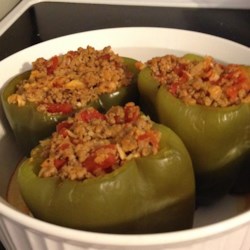
Healthy Recipes #2: Low Carb Stuffed Peppers


"A low carb version of a classic stuffed pepper recipe."

Ingredients:

  • 4 large bell peppers (any color)
  • 1 lb extra lean (at least 93%) ground beef or ground turkey
  • 1 clove garlic, minced
  • 1 cup cauliflower, grated
  • 1 teaspoon salt
  • 1/4 teaspoon black pepper
  • 1 can (14.5 oz) diced tomatoes
  • 1 can (8 oz) plain tomato sauce

   Directions:

  1. Cut thin slice from stem end of each bell pepper to remove top of pepper. Remove seeds and membranes; rinse peppers. If necessary, cut thin slice from bottom of each pepper so they stand up straight. In 4-quart Dutch oven, add enough water to cover peppers. Heat to boiling; add peppers. Cook about 5 minutes; drain.
  2. In 10-inch skillet, cook meat and garlic over medium heat 8 to 10 minutes, stirring occasionally, until meat is brown; drain. Stir in cauliflower, salt, pepper, diced tomatoes and tomato sauce; cook until hot.
  3. Heat oven to 350°F.
  4. Stuff peppers with meat mixture. Stand peppers upright in ungreased 8-inch square glass baking dish.
  5. Cover tightly with foil. Bake 30 minutes. Uncover and bake about 10 minutes longer or until peppers are tender.


En Espanol:


Título: Recetas saludables # 2: pimientos rellenos de carbohidratos bajos


"Una versión baja en carbohidratos de una clásica receta de pimiento relleno".


Ingredientes:
  • 4 pimientos grandes (cualquier color)
  • 1 lb extra magra (por lo menos 93%) de carne molida o pavo molido
  • 1 diente de ajo picado
  • 1 taza de coliflor, rallado
  • 1 cucharadita de sal
  • 1/4 cucharadita de pimienta negra
  • 1 lata (14.5 onzas) de tomates en cubitos
  • 1 lata (8 onzas) de salsa de tomate normal


Direcciones:

  1. Corte la rebanada fina del extremo del vástago de cada pimiento para quitar la parte superior de la pimienta. Quitar las semillas y las membranas; Enjuague los pimientos. Si es necesario, corte la rebanada delgada de la parte inferior de cada pimienta para que se paren recto. En el horno holandés de 4 cuartos, añada suficiente agua para cubrir los pimientos. Calentar a ebullición; Agregue los pimientos. Cocine unos 5 minutos; desagüe.
  2. En una sartén de 10 pulgadas, cocine la carne y el ajo a fuego medio de 8 a 10 minutos, revolviendo de vez en cuando, hasta que la carne esté dorada; desagüe. Agregue la coliflor, la sal, la pimienta, los tomates cortados en cuadritos y la salsa de tomate; Cocinar hasta caliente.
  3. Caliente el horno a 350 ° F.
  4. Rellenar los pimientos con la mezcla de la carne. Coloque los pimientos en posición vertical en un plato de hornear de cristal cuadrado de 8 pulgadas sin engrasar.
  5. Cubra bien con papel de aluminio. Hornee 30 minutos. Destapar y hornear unos 10 minutos más o hasta que los pimientos estén tiernos.

All rights reserved @ 2016 Allrecipes.com

Thursday, July 20, 2017

Healthy Recipes #1: Chinese Fried "Rice"

Chinese Fried “Rice”
Yields 1 dinner entree

Ingredients:
½ Head raw cauliflower
3 Green onions
1 Clove garlic minced
½ Tsp ginger
3 Tbsp low sodium soy sauce
3 Eggs beaten
Olive oil
5 oz cooked chicken beef, pork, shrimp, etc…
Any mixture, your choice

Directions:
In a wok or large flat skillet, heat enough oil to cover the bottom. Fry minced garlic with finely diced white part of onions for approx. 1 minute. Add grated cauliflower and fry for 4-5 minutes, stirring constantly. Add soy, ginger, diced green onion tops, and pre-cooked protein.

En Espanol:

Chino Frito "Arroz"
Rendimientos 1 cena entree

Ingredientes:
½ Cabeza de coliflor cruda
3 Cebollas verdes
1 diente de ajo picado
½ Tsp jengibre
3 cucharadas de salsa de soja baja en sodio
3 huevos batidos
Aceite de oliva
5 oz de pollo cocido carne de res, cerdo, camarones, etc ...
Cualquier mezcla, su elección

Direcciones:

En un wok o sartén plana grande, calentar suficiente aceite para cubrir el fondo. Freír el ajo picado con la parte blanca en cubitos de cebolla durante aprox. 1 minuto. Añadir la coliflor rallada y freír durante 4-5 minutos, revolviendo constantemente. Agregue la soja, el jengibre, las cubiertas de cebolla verde en cubitos y la proteína precocinada.

Sunday, July 9, 2017

Ideal Protein Improves

English:


Research has shown dietary issues are related to cognitive diseases. People who have diabetes and/or hypoglycemic problems have a direct relationship to increased dementia. Ideal Protein will help with improving blood sugar function in the body.


En Espanol:

La investigación ha demostrado que los problemas dietéticos están relacionados con las enfermedades cognitivas. Las personas que tienen diabetes y / o problemas hipoglucémicos tienen una relación directa con el aumento de la demencia. La proteína ideal ayudará a mejorar la función del azúcar en la sangre en el cuerpo.

Tuesday, June 27, 2017

Ideal Protein Helps

English:

Research has shown dietary issues are related to cognitive diseases. People who have diabetes and/or hypoglycemic problems have a direct relationship to increased dementia. Ideal Protein will help with improving blood sugar function in the body.

Espanol:

Las investigaciones han demostrado que las cuestiones dietéticas están relacionadas con las enfermedades cognitivas. Las personas que tienen diabetes y/o problemas hipoglucemiantes están directamente relacionadas con el aumento de la demencia. La proteína ideal ayudará a mejorar la función del azúcar en la sangre en el cuerpo.